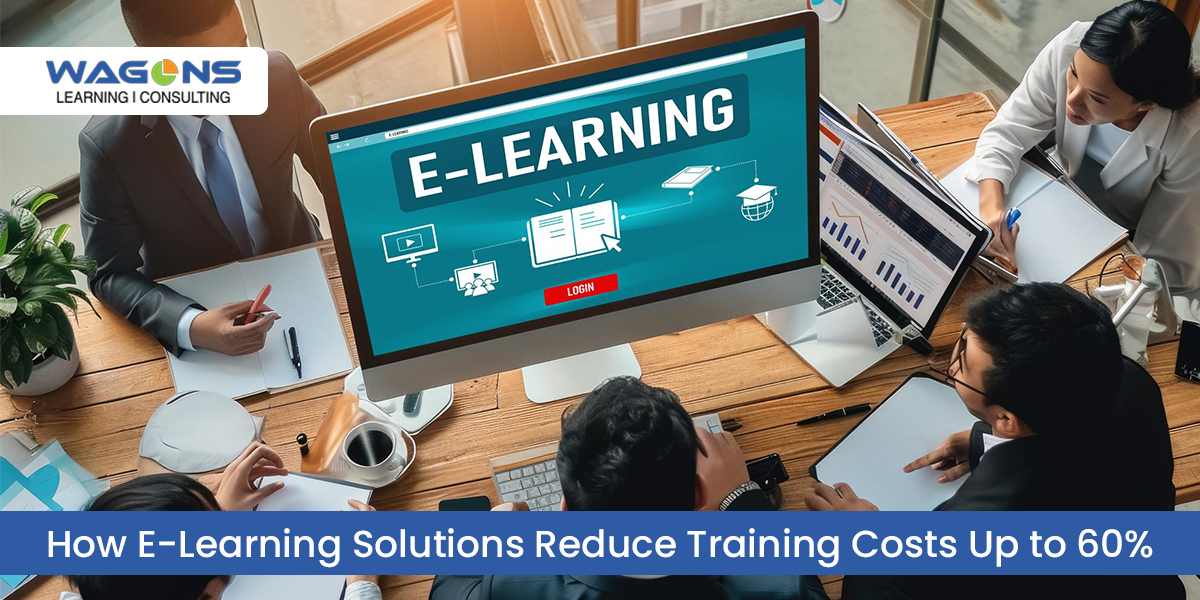
Corporate training budgets are under pressure as organizations invest heavily in employee development while traditional training methods add costs through travel, venues, trainer fees, and lost productivity during workshops. Companies spend an average of ₹1,200–2,500 per employee per training day (Association for Talent Development, 2024). For 500 employees trained quarterly, that’s ₹6–12.5 crores annually. Many organizations now adopt e-learning platforms and corporate learning management systems, achieving 40–60% training cost reductions while improving engagement and knowledge retention.
Why Traditional Employee Training Programs Are Expensive
The Hidden Costs of Classroom Training
Traditional employee training programs carry expenses most organizations underestimate:
Trainer Fees and Instructor Costs:
- External trainers charge ₹50,000-2,00,000 per day
- Internal trainers pulled from productive work
- Preparation time for curriculum development
- Multiple sessions needed for different batches
Travel and Accommodation Expenses:
- Flight costs for centralized training locations
- Hotel stays for multi-day programs
- Daily allowances and meal expenses
- Transit costs to and from venues
Venue and Logistics Costs:
- Conference room rentals
- Audio-visual equipment
- Training materials and handouts
- Catering and refreshments
Lost Productivity:
- Employees away from work for 2-5 days
- Projects delayed during training periods
- Customer service gaps when teams attend training
- Revenue impact from work stoppage
Repeated Training Sessions:
- New hires require separate training cohorts
- Content must be delivered multiple times
- Consistency challenges across batches
- Scheduling difficulties coordinating availability
Real-world example: A mid-sized company training 200 employees on new CRM software through 5-day classroom sessions faces costs exceeding ₹60 lakhs (trainer fees, travel, venue, productivity loss). The same training delivered via e-learning platform costs under ₹15 lakhs, a 75% reduction.
This is why organizations are rapidly adopting e-learning platforms to deliver scalable, cost-effective training without sacrificing quality.
How an E-Learning Platform Reduces Corporate Training Costs
Eliminates Travel and Logistics Costs
e-Learning platforms completely remove the largest cost drivers of traditional training:
No Physical Training Venues Required:
- Zero conference room rentals
- No audio-visual equipment costs
- Eliminated printing and material expenses
- No catering or facility management
Employees Access Training From Anywhere:
- Learn from office desks between meetings
- Train from home in hybrid work models
- Access content during commutes via mobile
- No travel time wasted
Ideal for Remote and Distributed Teams:
- Consistent training across all locations
- Global teams trained simultaneously
- No regional coordination challenges
- Same quality regardless of geography
Cost impact: Organizations report 80-90% reduction in logistics costs by eliminating travel, venues, and materials through digital delivery.
Scalable Employee Training Programs
Corporate learning management systems deliver unprecedented scalability, traditional training can’t match:
Train Hundreds or Thousands Simultaneously:
- One training module serves unlimited learners
- No capacity constraints or batch limitations
- New hires are onboarded immediately without waiting for cohorts
- Entire organization trained in days, not months
No Need for Repeated Classroom Sessions:
- Content delivered once, accessed continuously
- Consistent messaging across all learners
- No trainer scheduling conflicts
- Training available 24/7 on-demand
Learning Modules Reused Across Teams:
- Single development investment serves multiple departments
- Content updated centrally, instantly available to all
- Cross-functional training standardized
- Onboarding libraries built once, used perpetually
Scalability ROI: A compliance training program costing ₹20 lakhs to develop serves 5,000 employees over 3 yearsjust ₹133 per employee versus ₹2,500+ per employee for repeated classroom delivery.
How Custom eLearning Development Optimizes Training Investment
Custom eLearning vs Off-the-Shelf: Generic off-the-shelf courses waste time teaching irrelevant content. Custom eLearning solutions target your organization’s needs, maximizing training ROI.
With Custom eLearning Solutions, Companies Can:
Create Role-Specific Training Content:
- Sales teams learn your products, not generic selling
- Engineers train on your tech stack, not theoretical concepts
- Managers develop skills for your organizational culture
- Support staff master your actual processes and systems
Focus on Business-Critical Skills:
- Address your specific performance gaps
- Train on your proprietary systems and workflows
- Solve your unique operational challenges
- Build capabilities aligned to your strategy
Update Training Modules Easily:
- Product changes are reflected immediately in training
- Process improvements were incorporated quickly
- Compliance updates are deployed organization-wide instantly
- No reprinting materials or retraining trainers
Avoid Paying for Unnecessary Generic Courses:
- Zero wasted time on irrelevant content
- No paying for broad courses when you need specific skills
- Investment concentrated on high-impact learning
- Employees complete training faster
Result: More targeted training means less time spent learning and more time applying skills on the job. Custom eLearning reduces training time by 40-50% compared to generic courses while delivering better performance outcomes.
ROI Example: A bank developing custom eLearning for its loan origination system invests ₹12 lakhs. Generic banking courses cost ₹8 lakhs but require 3x more training time and miss bank-specific processes. The custom solution delivers faster competency at a lower total cost (training time + development).
Gamified eLearning Improves Engagement and Reduces Training Time
The Engagement Problem: Traditional training suffers from 20-30% completion rates and minimal knowledge retention. Employees click through content to get completion certificates without genuine learning.
Game based learning transforms passive consumption into active engagement:
Gamified Learning Features:
Leaderboards:
- Friendly competition between teams
- Recognition for top performers
- Motivates completion and excellence
- Creates social accountability
Badges and Rewards:
- Achievement recognition for milestones
- Progress visibility through earned credentials
- Intrinsic motivation through accomplishment
- Shareable certifications for professional profiles
Interactive Simulations:
- Practice real scenarios in safe environments
- Decision-making with immediate feedback
- Realistic job challenges without real-world risk
- Applied learning, not just information consumption
Quizzes and Challenges:
- Knowledge checks throughout training
- Immediate feedback on understanding
- Spaced repetition for retention
- Adaptive difficulty based on performance
Measurable Benefits:
Higher Course Completion Rates:
- Completion improves from 30% to 85%+ with gamification
- Employees voluntarily engage with content
- Training deadlines met without manager enforcement
Improved Knowledge Retention:
- Retention rates 60% higher than passive learning
- Interactive practice builds genuine competency
- Skills transfer to actual job performance
Faster Employee Learning Cycles:
- Engagement accelerates learning speed
- Active participation reduces time-to-competency
- Immediate feedback prevents misconceptions
Cost Impact: Gamified eLearning reduces training time by 30-40% through higher engagement while delivering better outcomes. This directly reduces training costs and increases productivity, employees return to productive work faster with stronger skills.
Key Business Benefits of Using an E-Learning Platform
Organizations implementing e-learning platforms for corporate training report measurable business impact:
Up to 40–60% Reduction in Training Time:
- Employees learn at optimal pace (faster or slower as needed)
- No waiting for scheduled sessions
- Modular content enables focused learning
- Immediate access reduces time-to-training
Lower Operational Training Costs:
- Eliminated travel, venue, and logistics expenses
- Reduced trainer dependencies
- Minimal material production costs
- Scalable delivery without cost increases
Scalable Employee Training Programs:
- Unlimited learners without capacity constraints
- Instant onboarding for new hires
- Consistent quality across all employees
- Global deployment without regional complexity
Improved Employee Skill Development:
- Self-paced learning optimizes retention
- On-demand access for just-in-time learning
- Microlearning fits busy schedules
- Continuous development culture
Consistent Learning Experiences Across Teams:
- Standardized content eliminates trainer variability
- Same quality in Mumbai, Bangalore, or New York
- Message consistency prevents confusion
- Equal access to development opportunities
Better Training Performance Analytics:
- Real-time visibility into completion rates
- Assessment scores identifying skill gaps
- Time-to-competency metrics
- ROI measurement proving training effectiveness
Corporate learning management systems transform training from unmeasured expense into strategic, data-driven investment with clear business returns.
Transform Training from Cost Center to Competitive Advantage
Training costs are rising for organizations using traditional methods. Travel expenses increase. Venue costs escalate. Productivity losses from employees attending off-site training compound.
Digital learning solutions offer a scalable alternative. An e-learning platform combined with custom eLearning solutions and gamified eLearning helps organizations deliver efficient, cost-effective training programs that employees actually complete and remember.
The organizations reducing training costs by 40-60% aren’t sacrificing quality, they’re delivering superior learning experiences through modern technology. Wagons Learning builds corporate eLearning solutions that measurably reduce costs while improving training outcomes.
Ready to reduce training costs while improving learning effectiveness? Contact Wagons Learning to discuss building scalable e-learning platforms that transform your corporate training investment.
FAQs
What is an E-Learning Platform for Corporate Training?
An e-learning platform is a digital learning system helping organizations deliver, manage, and track employee training programs online. It enables companies to train employees anytime and anywhere through web-based or mobile-accessible content.
Modern platforms include course hosting, assessment tools, progress tracking, certification management, and analytics dashboards proving training effectiveness.
How Does an E-Learning Platform Reduce Training Costs?
E-learning platforms reduce costs by eliminating travel, venue, and instructor expenses while allowing companies to train multiple employees simultaneously. Content is developed once and reused indefinitely, spreading development costs across thousands of learners and multiple years.
What is Custom eLearning Development?
Custom eLearning development involves creating tailored digital learning content specifically designed for an organization’s training goals and employee skill requirements. Unlike generic courses, custom content addresses your specific processes, systems, culture, and performance challenges.
Why is Gamified eLearning Effective for Employee Training?
Game based learning improves engagement by using game elements such as rewards, leaderboards, and interactive challenges, which increase participation and knowledge retention. Employees complete training faster and retain more because learning becomes engaging rather than obligatory.